


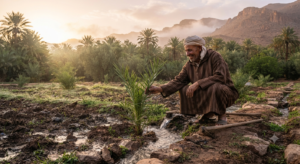
 The agricultural rhythm of the Todgha Valley is not governed by the Gregorian calendar but by the ancient, solar-based Amazigh calendar. This system provides a precise temporal map that has guided local farmers for centuries, ensuring the survival of the oasis in a challenging environment.
Temporal Precision for Oasis Survival
The Amazigh calendar is intrinsically linked to the seasons of the earth. Each month acts as a trigger for specific ecological tasks:
Water Management: The calendar dictates the timing for cleaning the khettaras and managing the distribution of water from the Todgha River.
Harvesting Cycles: Specific periods are earmarked for the harvest of dates, almonds, and barley, synchronized with seasonal temperatures.
Soil Preparation: The calendar guides the periodic enrichment of the soil, ensuring that the oasis remains productive despite the intense heat and evaporation rates.
Monthly Structure and Significance
The calendar is divided into agricultural milestones:
Yennayer (January): The marking of the start of the agricultural year, often celebrated with communal feasts.
Spring Months: Focus on the pollination of date palms and the protection of early-stage fruit crops.
Summer/Autumn Cycles: Dedicated to the intense labor of the harvest and the preparation for the winter months.
The Value of Indigenous Knowledge
Academic studies in traditional ecology emphasize that this calendar is not merely folklore; it is a sophisticated system of environmental data. By aligning human activity with the natural cycles of the Todgha Valley, the local community minimizes ecological footprints and maximizes sustainable output. For visitors, understanding these cycles offers a deeper appreciation of the labor and wisdom behind the landscape.