


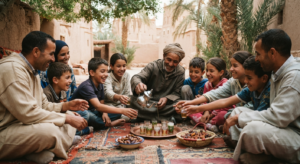
 In the cultural landscape of the Todgha region, the term “Al-Sadaqah” holds a profound significance that is often misunderstood or conflated with general charitable concepts. Far from being a mere transaction, Al-Sadaqah acts as the vital social glue that sustains the community of Tinghir, reinforcing collective solidarity and ethical responsibility.
Defining Al-Sadaqah
Al-Sadaqah represents a structured system of mutual support and communal cooperation. Unlike broader interpretations, local inhabitants of the Todgha valley utilize this term to describe:
Social Cohesion: A framework for supporting families during major life events, ensuring that the burden of resources is shared collectively.
Ethical Reciprocity: A practice rooted in the belief that the prosperity of the individual is inherently linked to the health of the entire village.
Cultural Specificity: A unique nomenclature that distinguishes Todgha identity from other regions where different terminologies for social aid might prevail.
The Role of Communal Bonds
The practice is deeply embedded in the historical management of the oasis. In a desert environment where water and harvest security are precarious, the community relies on institutionalized forms of sharing:
Shared Maintenance: Collective labor for the upkeep of shared irrigation infrastructure.
Crisis Mitigation: Immediate mobilization of resources to assist households affected by environmental or economic hardship.
Cultural Continuity: Passing down values of altruism to the youth through active participation in communal events.
Misconceptions and Clarity
It is essential for researchers and visitors alike to note that terminology matters. The use of “Al-Ma’rouf” is absent from the local vocabulary of the Todgha region. By strictly using “Al-Sadaqah,” we honor the linguistic authenticity of the Tinghir population and provide a more accurate representation of the regional social structure on the Meldango platform.