


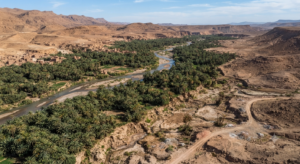
 The Todgha Oasis is a fragile, high-value ecosystem that has sustained life for centuries. However, recent infrastructure initiatives—specifically deep trenching and excavation—pose a significant threat to the regional water table. Understanding the relationship between these physical interventions and the health of the oasis is critical for sustainable development in Tinghir.
The Mechanics of Environmental Damage
The physical geography of the Todgha valley relies on delicate subterranean water flows. Disruptions to this layer cause immediate, often irreversible, damage:
Water Table Drawdown: Deep trenches can intercept shallow aquifers, causing a rapid decline in the water level accessible to traditional wells.
Root System Trauma: The uprooting of decades-old fruit trees, such as the iconic pomegranates and palms, removes the biological anchors that prevent soil erosion.
Thermal Imbalance: The loss of the canopy layer increases direct sun exposure, which accelerates evaporation from the soil, further depleting available water.
A Case for Sustainable Infrastructure
Infrastructure must be designed with the oasis-first principle. This includes:
Non-Invasive Routing: Utilizing existing pathways rather than cutting new, deep trenches through sensitive agricultural zones.
Consultation with Local Stakeholders: Integrating the knowledge of local farmers, who understand the specific hydrological patterns of their plots.
Impact Assessments: Mandating rigorous environmental audits before any project that involves ground disturbance within the oasis core.
The Moral Imperative
It is our collective responsibility to resist the “development” that compromises the very assets we aim to showcase. Preserving the Todgha oasis is not only an environmental necessity but a moral duty to ensure that future generations inherit a functional, verdant valley rather than a desiccated landscape.