


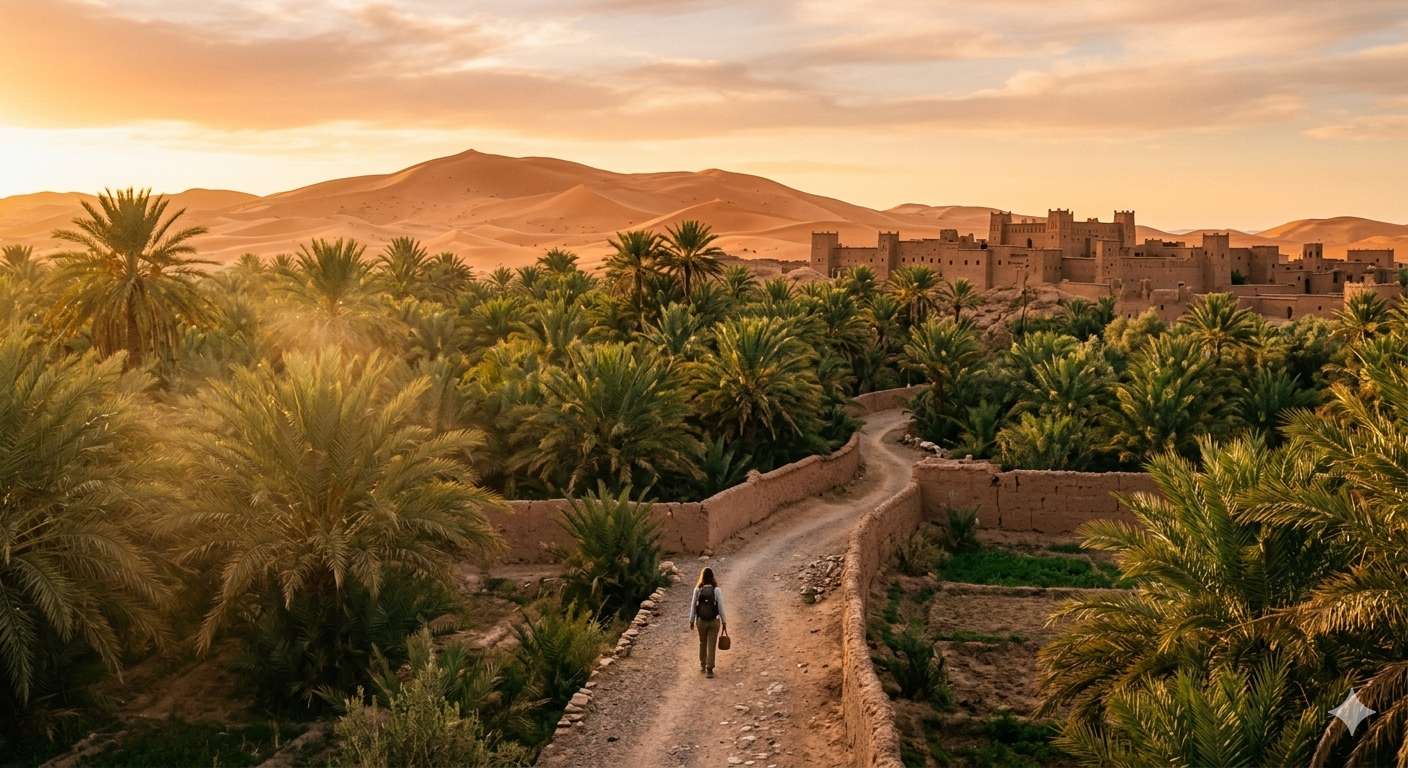
Southeastern Morocco is a beautiful place. The palm trees and the big sand dunes of the Sahara are amazing to see. These places are very special.. They can also get hurt easily. So we have to be careful when we visit. We have to make sure that these places are still nice for people to visit in the future.
To be a traveler you have to think about what you are doing. You can make choices that do not hurt the earth. At the time you can help the local people by spending money in their towns. Here are some things you can do to be a traveler when you go to Southeastern Morocco.
* You can do things that help the earth and the people who live in Southeastern Morocco.
* You can visit the palm groves and the big sand dunes of the Sahara in a way that does not hurt them.
* You can help the people who live in Southeastern Morocco by being a traveler.
Being a traveler is important when you visit Southeastern Morocco. Southeastern Morocco is a place and we have to take care of it. We have to think about the people who live in Southeastern Morocco and the earth when we make choices. We have to be travelers when we visit Southeastern Morocco.
1. Protecting Fragile Water and Oasis Ecosystems
Oases are miraculous ecosystems. Unfortunately, they currently face severe pressures from climate change and prolonged droughts. Furthermore, traditional oases rely on ancient underground irrigation channels to sustain their agricultural plots. As a result, saving resources is a vital responsibility for every single visitor.
Conserve Water Resources: To begin with, water is the most precious commodity in pre-Saharan regions. Therefore, take shorter showers, reuse your towels, and turn off taps completely.
Respect the Trees and Agriculture: Secondly, palm groves are not just pretty scenery. Instead, they are active farming plots belonging to local families. For this reason, avoid damaging trees or blocking irrigation canals.
Manage Your Waste: Moreover, plastic pollution is a major threat to rural areas. This is because small villages often lack advanced recycling infrastructure. Thus, always carry a reusable water bottle and pack out all your trash.
2. Supporting the True Local Economy
Moving on to the financial aspect, economic solidarity is a powerful pillar of responsible tourism. Specifically, you should ensure that your travel spend goes directly into local hands. Consequently, you help preserve traditional livelihoods and prevent corporate wealth extraction.
Choose Locally-Owned Accommodations: First, stay in family-run guest houses or authentic earthen lodges. This is important because these establishments directly employ local families. In addition, they serve fresh, regional ingredients.
Hire Certified Local Guides: Next, if you want to explore canyons or ancient palaces, always hire certified guides from the immediate area. Not only do they offer unmatched geographic expertise, but your money also stays directly in the village.
Buy Directly from Cooperatives: Finally, souvenirs are a great way to support the community. However, you should seek out independent women’s cooperatives for carpets or dates. By doing so, you ensure that artisans receive fair pay.
3. Honoring and Preserving Cultural Heritage
In addition to environmental and economic care, preserving cultural identity is vital. Indeed, the heritage of the south is rooted in deep traditions of hospitality and solidarity. For that reason, approaching the local lifestyle with humility fosters meaningful cultural exchanges.
Dress and Act Respectfully: To start, the region is highly welcoming to international travelers. Nevertheless, wearing modest clothing that covers shoulders and knees shows deep respect for local cultural values.
Ask Before Taking Photos: Similarly, always ask for explicit permission before photographing local residents. This is especially true for women and children in the markets. Ultimately, a warm conversation goes a long way.
Engage with Genuine Curiosity: In conclusion, take the time to learn a few words of the local language. Furthermore, try to understand traditional customs with an open mind.
Mindful Travel Checklist for MeldanGo Explorers
To sum up, before you head out on your next adventure, use this quick checklist to stay on track:
First, pack a reliable multi-use water filtration bottle to actively reduce plastic waste.
Second, book your stays through verified regional directories that champion authentic local services.
Third, keep plenty of small Moroccan Dirham (MAD) cash notes on hand. Consequently, you can tip small-scale service providers and craftsmen directly.
Finally, take nothing but photos and leave nothing but footprints behind.