


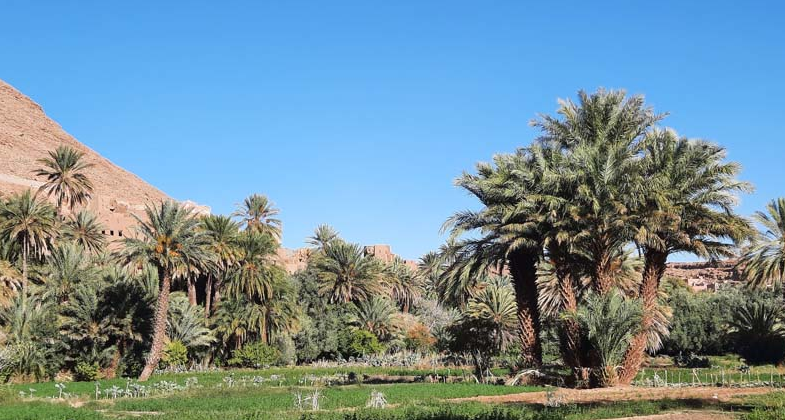
 To the untrained eye, a desert oasis might look like a wild, chaotic forest of palm trees growing randomly around a river source. But step inside the magnificent palmeraie of Tinghir, stretching along the floor of the Todgha Valley, and you will discover one of the most sophisticated, sustainable, and ancient agricultural systems on the planet.
Long before “permaculture” and “farm-to-table” became modern travel trends, the communities of Southern Morocco were perfecting an eco-friendly farming model designed to thrive in an environment with high summer temperatures and 0% humidity.
For the eco-conscious traveler, understanding how this fragile green ecosystem works is the key to truly connecting with the landscape and the people of Tinghir.
1. The Three-Story Canopy: Nature’s Smart Architecture
The genius of oasis agriculture lies in its vertical design, known as the three-story system. Space and water are scarce in the desert, so farmers maximize their plots by stacking crops in layers that protect and nourish one another:
- The Top Story (The Date Palms): Towering high above, the giant date palms act as the umbrella of the oasis. Their thick, sweeping fronds block the harsh, direct desert sun and slow down moisture evaporation, creating a cooler, protected microclimate underneath.
- The Middle Story (The Fruit Trees): Sheltered by the palms, this layer consists of smaller olive, pomegranate, almond, fig, and apricot trees. They thrive in the partial shade, producing rich fruits that would otherwise burn under the open sun.
- The Ground Story (The Crops): At the earth level, where the air is cool and damp, farmers grow seasonal vegetables (turnips, carrots, pumpkins), alfalfa for livestock, and aromatic herbs like coriander, parsley, and the valley’s famous mint.
2. Seguias: The Rhythmic Pulse of Shared Water
How does a river flowing from the high limestone cliffs of the Todgha Gorges reach thousands of individual family plots miles downstream? The answer is the Seguias—an intricate network of open-air irrigation channels made from earth and clay.
Water management here is a masterclass in community trust and ancient engineering. For generations, the distribution of water has been governed by local committees. Each family or district is allocated a specific time slot—measured historically by the sun or water clocks—during which mud gates are opened to flood their specific plot.
Walking through the paths of the palmeraie, you will often hear the soft, rhythmic sound of rushing water shifting from one channel to another, a reminder that survival in the desert relies entirely on cooperation, not competition.
3. A Zero-Waste, Organic Lifestyle
Because the oasis is isolated by the surrounding stone desert, nothing is wasted. The ecosystem is completely cyclical:
- The alfalfa grown on the ground floor feeds the local livestock (sheep and donkeys).
- The livestock provides natural manure to fertilize the soil, keeping the agriculture 100% organic without chemical inputs.
- Dried palm fronds are recycled to build fences protecting fields from stray animals, or used as fuel for traditional clay bread ovens.
When you sit down in a local guesthouse in Tinghir and enjoy a meal, the olive oil, the dates, the fresh herbs, and the vegetables on your plate are the direct results of this meticulous, zero-waste cycle.
How to Respect and Experience the Palmeraie as a Traveler
- Stick to the Main Pathways: The oasis is a living workspace and private agricultural property. Enjoy the shade and take photos from the clear dirt trails, but avoid stepping directly into planted fields or crossing irrigation walls.
- Support the Local Economy: When visiting Tinghir, buy your dates, almonds, and olives directly from local vendors or small shops near the market. Your money goes straight back into supporting the families who maintain this ancient agricultural heritage.
- Take a Walking Tour: The best way to learn the hidden secrets of the plants, the irrigation system, and the history of the valley is to take a slow walking tour with a local guide who grew up tending these very lands.
Want to dive deeper into the sustainable heritage of Southern Morocco? Discover eco-friendly lodges, cultural walking tours, and authentic hosts in the Tinghir oasis on MeldanGo.