


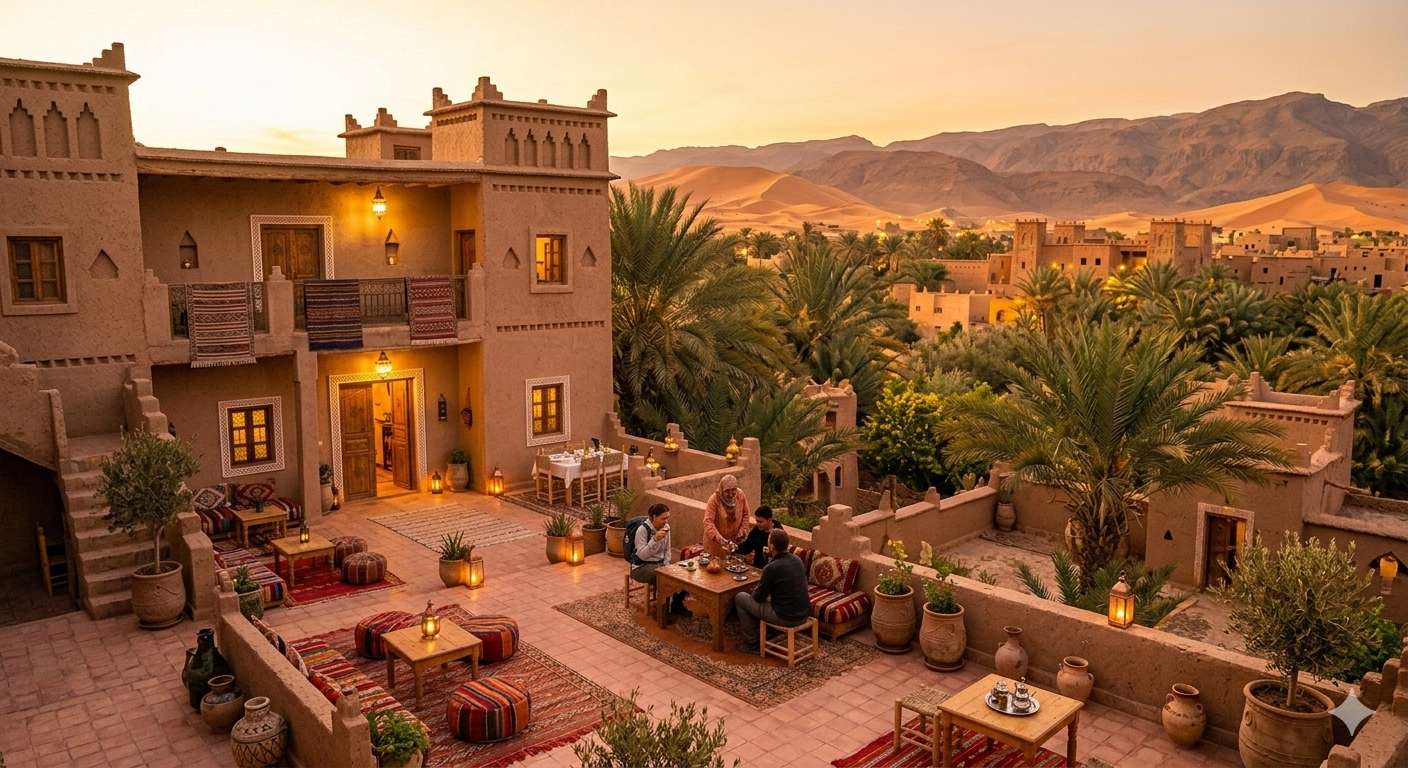
 Finding the perfect place to stay is a key part of any journey. In fact, your choice of accommodation shapes your entire travel experience. Furthermore, it directly impacts the local community and the fragile environment of the oases and deserts. Therefore, making a conscious choice is highly important. Below, you will find the best practices to guide your booking decisions.
In essence, choosing where to sleep is not just about comfort. Instead, it is about connecting with the destination. Consequently, selecting the right establishment allows you to enjoy an authentic stay while doing good.
1. Prioritize Family-Run Guest Houses (Maisons d’Hôtes)
To begin with, staying in family-owned properties offers an unmatched cultural immersion. Specifically, these guest houses provide a warm atmosphere that large international hotels simply cannot replicate.
Experience True Hospitality: First, you will experience genuine local warmth. Indeed, hosts often share traditional tea, regional stories, and valuable travel advice.
Keep Funds in the Community: Secondly, your money stays directly in the village. As a result, you actively support local livelihoods, school funding, and family businesses.
Enjoy Authentic Cuisine: Moreover, family-run stays usually serve home-cooked meals. By doing so, they offer you a real taste of traditional culinary practices using fresh, seasonal ingredients.
2. Choose Traditional Bioclimatic Architecture
Moving on to environmental comfort, traditional buildings in the south are architectural wonders. In particular, ancient structures made from local clay and earth are perfectly adapted to the desert climate.
Natural Thermal Comfort: To start, earthen walls absorb heat during the scorching day. Conversely, they slowly release that warmth during the chilly desert nights.
Eco-Friendly Design: In addition, these traditional kasbahs and ksour have an incredibly low carbon footprint. This is because they use natural, local materials instead of modern concrete.
Preserve Cultural Heritage: Thus, choosing these accommodations encourages the preservation of historic masonry. Ultimately, it helps keep ancestral building techniques alive.
3. Support Eco-Responsible Desert Camps and Lodges
In addition to village stays, many travelers venture into the sand dunes or deep river canyons. However, these remote areas are highly sensitive to pollution and resource depletion.
Check Solar Power Usage: First, look for desert camps that utilize solar energy. Consequently, they reduce noise pollution from loud generators and protect the serene silence of nature.
Inquire About Water Management: Next, water is extremely scarce in pre-Saharan regions. Therefore, favor lodges that practice strict water conservation and use eco-friendly waste systems.
Respect the Wilderness: Finally, choose camps that respect the natural layout of the dunes. By doing so, you ensure that local wildlife and fragile ecosystems are not disrupted by heavy tourism.
Accommodation Checklist for MeldanGo Explorers
To sum up, before you book your next room or desert tent, keep this quick checklist in mind:
First, look for locally-owned accommodations to ensure your money directly benefits regional families.
Second, opt for traditional earthen buildings to enjoy natural climate control and support heritage preservation.
Third, use local service directories to find verified, authentic properties that care about their community.
Finally, ask about water and energy practices to minimize your ecological footprint during your stay.