


 An Ancient Weaving Legacy
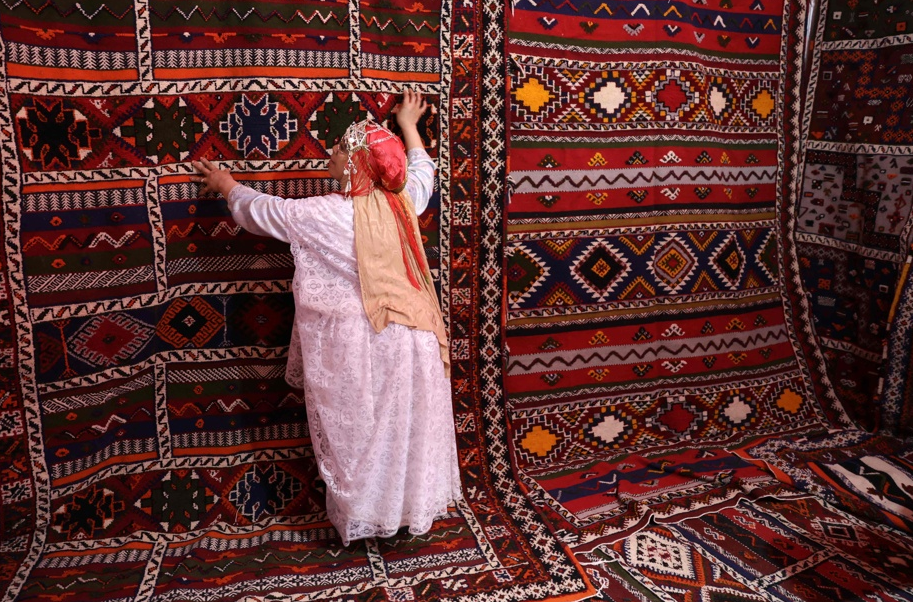
Taznakht is famous across North Africa for its exceptional handmade textiles. This creative industry is managed entirely by rural women weavers. These artisans belong to the historic Ait Ouaouzguite tribal federation. They work within local home cooperatives using traditional techniques. No written patterns are used during the long fabrication process.
Processing the Raw Wool
The creation of an authentic carpet requires high-quality raw materials. Weavers source premium fleece from local High Atlas sheep breeds. First, they wash the raw wool thoroughly in clean mountain streams. Next, they spin the fibers using manual drop spindles. This careful preparation guarantees that the finished rug remains durable for decades.
Decoding Geometric Meanings
Every single motif woven into a Taznakht carpet tells a personal story. The geometric patterns represent a complex visual language. For example, specific lines can indicate family status or tribal history. To experience more local trading traditions, you should plan a trip using the Taznakht weekly souk travel guide.
Common Weaver Motifs
- The Diamond Shape: Represents a protective eye to shield the home from danger.
- The Chevron Pattern: Symbolizes migratory bird tracks and changing seasonal paths.
- The Scissor Motif: Honors the tool of the craft and celebrates textile work.
- The Fishbone Design: Reflects local river waters and hopes for agricultural prosperity.
Identifying Organic Dyes
Genuine Taznakht carpets utilize natural pigments extracted from local desert plants. Yellow tones come from saffron spice and dried pomegranate skins. Madder root produces rich red colors, while indigo provides deep blues. Therefore, buyers should look for subtle variations in color shade. Uniform, bright colors usually indicate cheap industrial chemical dyes.