


 When travelers think of Moroccan food, their minds often drift to the bustling night markets of Marrakech or the seafood of the coast. But to find the true, beating heart of North African culinary heritage, you must travel inland, where the Atlas Mountains meet the desert, and enter the lush oasis of the Todgha Valley.
In Tinghir, food is not just a meal; it is a slow, rhythmic ritual shaped by the desert climate, centuries of nomadic history, and the fertile soil of the local palmeraie.
Here is what makes traditional Berber cuisine in the Todgha region an unforgettable journey for your senses.
1. The Magic of Earth and Fire
At the core of Berber cooking is a deep connection to the land. Unlike modern kitchens that rely on speed, the traditional chefs of the Todgha Valley respect time.
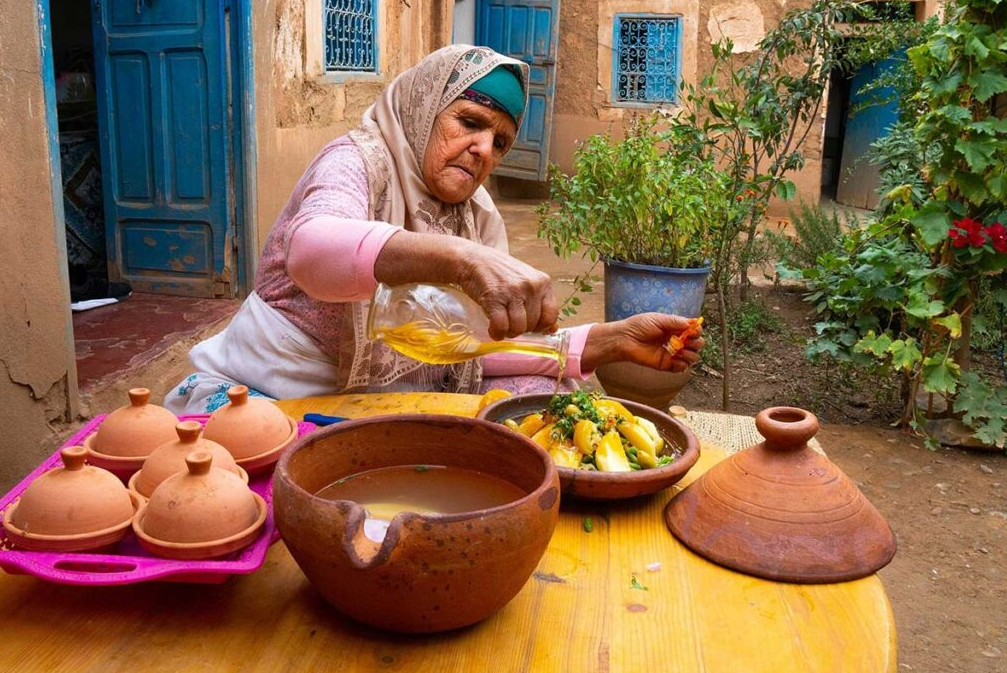
Food is traditionally prepared over open wood fires or charcoal embers, using unglazed clay vessels. The porous clay breathes, circulating heat perfectly in our arid 0% humidity climate, allowing the ingredients to simmer in their own juices. This slow-cooking method transforms simple, rugged ingredients into incredibly tender dishes, locking in earthy flavors that modern stainless-steel pans simply cannot replicate.
2. Beyond the Standard Tagine: Authentic Local Flavors
While you will find incredible tagines throughout Tinghir, the valley holds deeper culinary secrets rooted in community and celebration.
True Berber cuisine relies heavily on whole grains, wild herbs gathered from the edges of the oasis, and preserved meats. One of the regional highlights is Madfouna (often called Berber Pizza), where a rustic dough is stuffed with a savory mixture of minced meat, spices, and almond pieces, then baked until crispy.
Another staple is the communal preparation of couscous—never served in a tagine, but always presented in a large, shared wooden or clay bowl (qasria), topped with a rich broth of seasonal oasis vegetables like turnips, pumpkin, and zucchini.
3. The Oasis Larder: Fresh, Sustainable, and Local
To understand the food of Todgha, you only need to walk through the ancient irrigation pathways of the Tinghir oasis. For generations, locals have practiced a sustainable, multi-layered agriculture system:
- The Top Layer: Date palms providing shade and natural sweetness.
- The Middle Layer: Pomegranate, almond, and fig trees.
- The Ground Layer: Alfalfa, mint, saffron, and seasonal vegetables.
This means the mint in your afternoon tea was likely picked just an hour before water was boiled, and the olive oil drizzled over your morning bread was pressed from trees growing just a few hundred meters away. It is the original “farm-to-table” experience, born out of necessity and perfected over centuries.
4. Hospitality: The Secret Ingredient
You can follow a recipe precisely, but you cannot replicate the hospitality of the Todgha Valley. In Berber culture, a guest is a blessing. Meals are meant to be shared, eaten with the right hand using pieces of fresh, crusty bread as utensils.
The culinary journey always begins and ends with the pouring of hot mint tea—poured from high above to create a delicate foam, symbolizing respect and a warm welcome.
Traveler’s Tip: How to Experience True Berber Cuisine in Tinghir
To taste the authentic flavors of the valley, step away from the standardized tourist menus. Look for local guesthouses (kasbahs) inside the palmeraie or eco-lodges near the Gorges that offer homemade meals prepared by local families. Don’t hesitate to ask your hosts about the cooking process—sharing the story behind the dish is just as important as sharing the meal itself.
Planning your journey to Southern Morocco? Explore our handpicked selection of authentic stays, local guides, and cultural experiences in Tinghir on MeldanGo.