


Sijilmassa: The Ancient Trade Epicenter
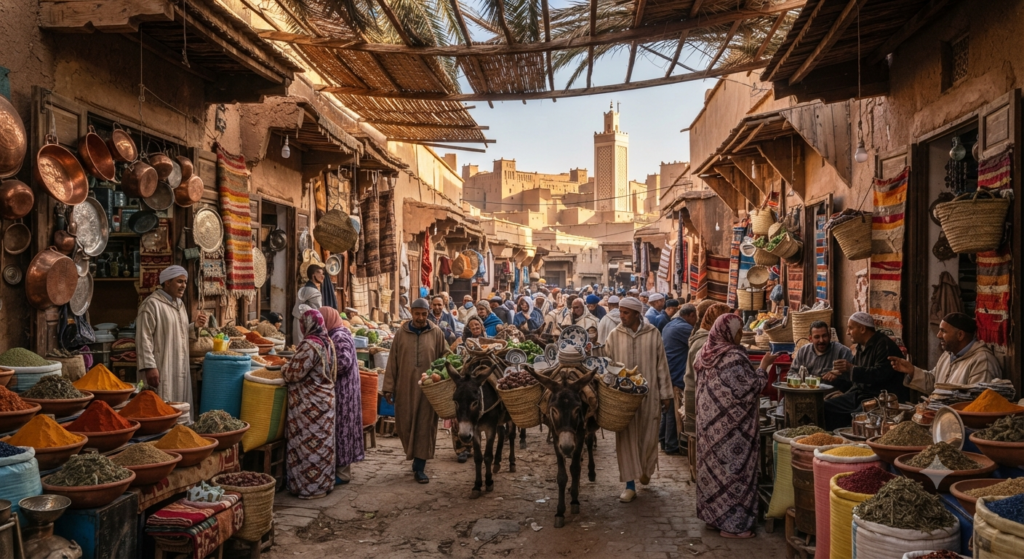 Rissani is built upon the hallowed ground of Sijilmassa, an ancient city that once dominated the trans-Saharan trade routes. As the absolute epicenter of the gold and salt trade connecting sub-Saharan Africa to the Mediterranean, Sijilmassa’s historical weight still defines the identity of Rissani today. The ruins, though scattered, serve as a potent reminder of a time when this region controlled the economic pulse of an empire, influencing the development of Moroccan commerce for centuries.
Spiritual Foundations and the Alaouite Dynasty
Beyond its commercial history, Rissani holds profound reverence as the ancestral home and burial site of Moulay Ali Cherif, the founder of the current Alaouite dynasty.
A Site of Pilgrimage: The mausoleum complex is a critical landmark, drawing visitors and pilgrims who wish to connect with the roots of the kingdom’s ruling house.
Historical Resilience: This spiritual connection elevates Rissani from a simple market town to a pillar of national history, ensuring its status as a must-visit destination for history enthusiasts.
The Authenticity of the Rissani Souk
The Rissani souk remains one of the most robust and authentic traditional markets in all of Morocco. It operates with a rhythm largely unchanged by modern tourism, functioning as the primary exchange hub for the surrounding region. Here, nomadic tribes from the deep desert meet with oasis farmers to trade livestock, local dates, and traditional crafts. For the visitor, it offers an unvarnished, sensory-rich experience of traditional Saharan society that is increasingly rare in the digital age.