


The Architectural Marvel of the Saghro
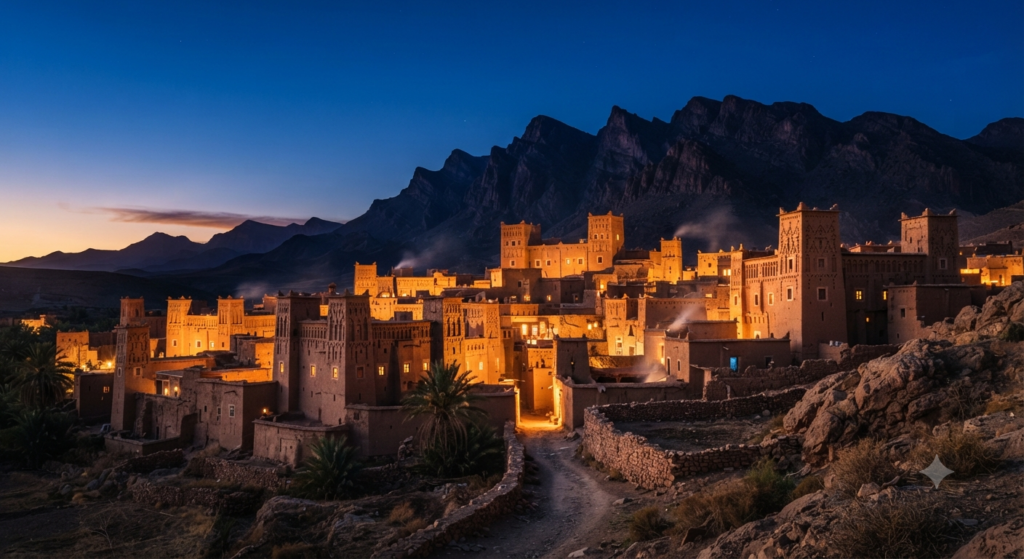 Nkob is widely known as the “Village of 45 Kasbahs,” a title that reflects its historical importance as a center of prestige and defense in the pre-Saharan era. Located on the vital route connecting the Draa and Dades valleys, Nkob remains one of the most impressively preserved examples of earthen construction in Southern Morocco. Every kasbah here tells a story of local power, family heritage, and the necessity of protection against historical instability.
Bioclimatic Engineering and Restoration
The kasbahs in Nkob are constructed using pisé (rammed earth), a method that serves as a masterclass in ancient bioclimatic engineering.
Thermal Regulation: These thick, earthen walls keep interiors naturally cool during the heat of the day and warm during the cold desert nights, proving that traditional methods are highly effective and sustainable.
Sustainable Conservation: Many of these historic structures have been thoughtfully restored and repurposed as boutique guesthouses. This initiative allows modern travelers to experience the history of the Saghro region firsthand while simultaneously providing the funding necessary to preserve these crumbling monuments for future generations.
A Slow-Paced Saharan Life
The setting of Nkob—framed against the dramatic, jagged backdrop of the Jebel Saghro—makes it a prime destination for photographers and slow-travel enthusiasts. Life in the village moves in tandem with agricultural cycles, focusing on the preservation of social customs and traditional craftsmanship. Visiting Nkob provides an intimate, tranquil experience, offering a stark and beautiful contrast to the busier tourist hubs of the Dades or Todgha valleys.