


The Symbol of the Saharan Frontier
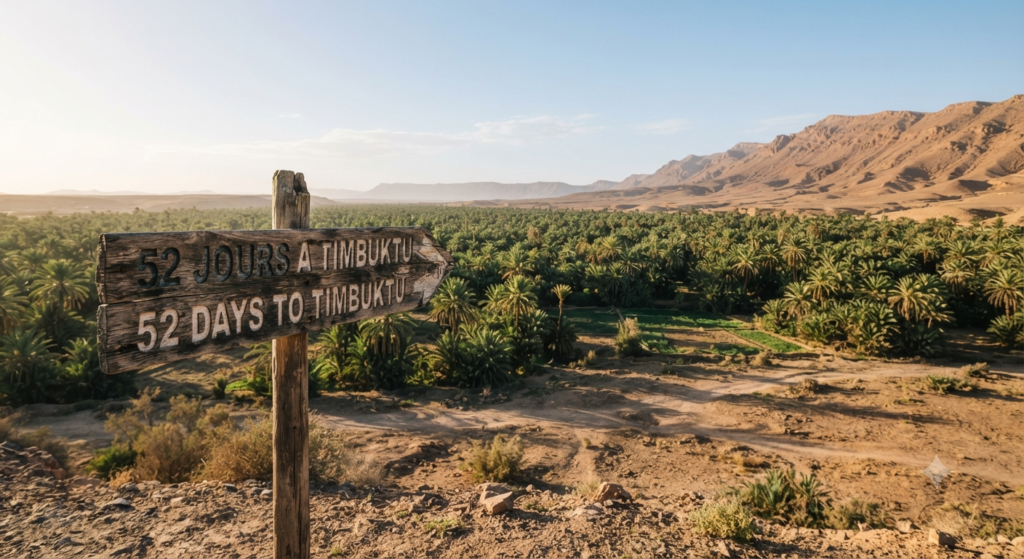 Zagora is not merely a town; it is a legendary signifier of the Saharan frontier. Nestled within the long, verdant corridor of the Draa Valley, it has served for centuries as a vital resting point for weary merchants and massive caravans traveling from the north into the heart of Africa. Its geographic importance is cemented in history, and the famous signpost—”52 Days to Timbuktu”—remains a poignant, iconic reminder of the epic scale and peril of the ancient trade routes that once anchored here.
Life Along the Draa River
The town’s survival and prosperity are inextricably linked to the Draa River.
The Oasis Lifeline: The river provides a constant source of water, enabling the cultivation of dense, sprawling palm groves that contrast sharply against the surrounding arid landscape.
Nomadic Heritage: The architecture of Zagora, characterized by sturdy earthen structures, is specifically designed to combat the extreme desert climate. This architectural wisdom reflects the traditions of the nomadic tribes who have frequented this valley for generations, using it as a base for both trade and temporary settlement.
Why Zagora Matters for Modern Travelers
Today, Zagora functions as a sophisticated administrative and cultural center that successfully bridges the gap between nomadic traditions and modern tourism needs. It acts as the perfect starting point for those looking to explore the rugged beauty of the Draa Valley. Whether you are interested in the oral histories of the region or the vast, silent landscapes of the southern regs, Zagora provides the authenticity and infrastructure required for a truly immersive desert experience.