


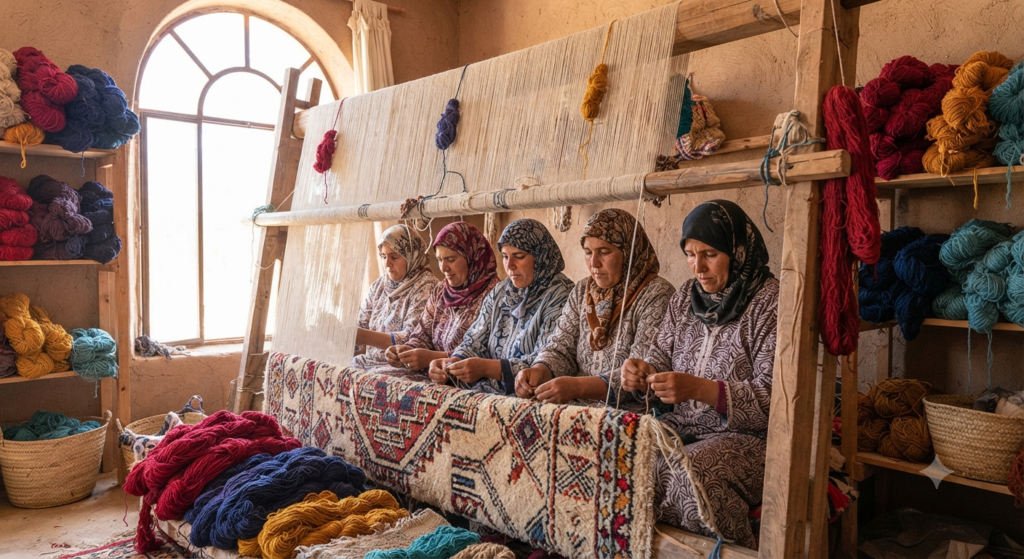
 Tazenakht holds a preeminent position in the Moroccan artisanal sector. It is not merely a town but a center of artistic production where the synthesis of wool, natural dyes, and complex geometry results in textiles of international renown.
The Craftsmanship of Tazenakht
The carpets produced here are distinguished by their adherence to tribal designs that have been preserved through an oral and tactile tradition.
Technical Mastery: Every rug is hand-loomed, with patterns that often serve as historical records of tribal alliances and regional identities.
Material Integrity: The shift toward natural mineral and vegetable dyes has bolstered the market for these rugs, ensuring that they remain a sustainable artisanal product.
The Cooperative Economic Model
The weaving sector in Tazenakht is largely driven by women’s cooperatives, which provide a critical economic framework for local families:
Skill Transfer: These cooperatives ensure that younger generations master the intricate knotting techniques required for high-quality carpets.
Market Autonomy: By bypassing middlemen, these groups maintain control over the pricing and quality of their output, preserving the value of their labor.