


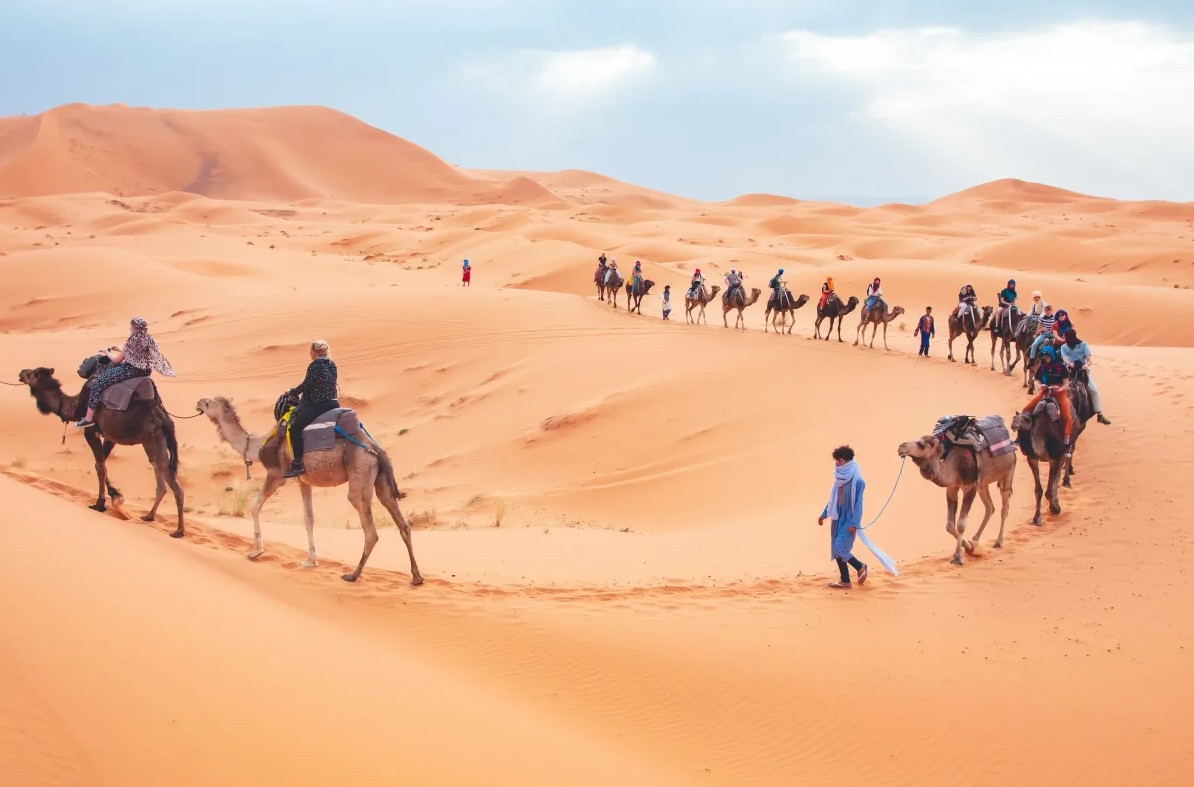
 Merzouga is a region of breathtaking natural beauty. For instance, the sprawling golden dunes of Erg Chebbi offer profoundly beautiful and shifting landscapes. However, these unique desert environments are also ecologically fragile. Therefore, practicing responsible tourism is an essential duty today. In addition, mindful travel ensures that these vibrant environments are preserved for future generations.
In essence, being a mindful traveler in the Sahara means making conscious choices. Consequently, you can easily minimize your environmental footprint while exploring the dunes. Meanwhile, you will also maximize your positive impact on the local desert communities. Below, you will find practical steps on how to achieve sustainable and respectful travel during your journey.
1. Protecting Fragile Desert Ecosystems
Dunes are miraculous ecosystems. Unfortunately, they currently face severe pressures from climate change and unregulated desert driving. Furthermore, the desert flora relies on a delicate balance to survive in arid conditions. As a result, saving resources is a vital responsibility for every single visitor.
Conserve Water Resources: To begin with, water is the most precious commodity in the Sahara. Therefore, carry sufficient supplies, reuse your towels, and be mindful of your overall consumption.
Respect the Sand Dunes: Secondly, the dunes are not just for sliding. Instead, they are sensitive habitats. For this reason, avoid using off-road vehicles in protected areas to prevent erosion.
Manage Your Waste: Moreover, plastic pollution is a major threat to the desert landscape. Thus, always carry a reusable water bottle and pack out all your trash, including organic waste.
2. Supporting the True Local Economy
Moving on to the financial aspect, economic solidarity is a powerful pillar of responsible tourism. Specifically, you should ensure that your travel spend goes directly into local hands. Consequently, you help preserve traditional desert livelihoods and prevent corporate wealth extraction.
Choose Locally-Owned Accommodations: First, stay in family-run desert camps or authentic earthen lodges. This is important because these establishments directly employ local families.
Hire Certified Local Guides: Next, if you want to explore the dunes or fossils, always hire certified guides from the immediate area. Not only do they offer unmatched geographic expertise, but your money stays directly in the village.
Buy Directly from Cooperatives: Finally, souvenirs are a great way to support the community. However, you should seek out independent desert cooperatives for scarves or dates. By doing so, you ensure that artisans receive fair pay.
3. Honoring and Preserving Cultural Heritage
In addition to environmental and economic care, preserving cultural identity is vital. Indeed, the heritage of the Sahara is rooted in deep traditions of hospitality and Gnaoua music. For that reason, approaching the local lifestyle with humility fosters meaningful cultural exchanges.
Dress and Act Respectfully: To start, the region is highly welcoming to international travelers. Nevertheless, wearing modest clothing shows deep respect for local cultural values and traditions.
Ask Before Taking Photos: Similarly, always ask for explicit permission before photographing local residents. This is especially true for nomadic families. Ultimately, a warm conversation goes a long way.
Engage with Genuine Curiosity: In conclusion, take the time to learn a few words of the local language. Furthermore, try to understand traditional desert customs with an open mind.
Mindful Travel Checklist for MeldanGo Explorers
To sum up, before you head out on your next desert adventure, use this quick checklist to stay on track:
First, pack a reliable multi-use water filtration bottle to actively reduce plastic waste.
Second, book your stays through verified regional directories that champion authentic local services.
Third, keep plenty of small Moroccan Dirham (MAD) cash notes on hand to tip small-scale service providers and craftsmen directly.
Finally, take nothing but photos and leave nothing but footprints behind.