


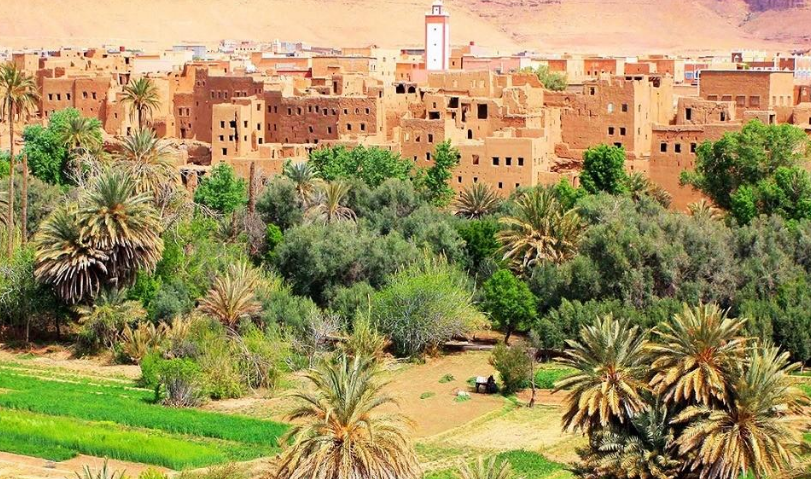
 Every traveler who spends time in Tinghir will eventually hear the name Sidi Meskour. It appears on institutional maps, it is spoken by elders in the shade of the palmeraie, and it proudly names the historic primary school that has shaped generations of local children in the Tichka neighborhood since 1985.
But who was the man behind the name, and why does his memory continue to hold such a profound place in the hearts of the people of the Todgha Valley?
To understand Tinghir’s identity, one must look past the geological grandeur of the gorges and dive into the spiritual and social history woven into the very soil of the oasis.
1. The Guardians of the Valley
In the historical landscape of Southern Morocco, prominent figures known as Sada or spiritual guardians played a role that went far beyond religion. In isolated valleys like the Todgha, these men were the social anchors of the community.
Sidi Meskour was one of these revered figures. He was not a man of isolation, but a pillar of the community. In a time when tribal conflicts could easily spark over water rights in the oasis or grazing lands in the mountains, figures like Sidi Meskour acted as neutral mediators. Their presence brought peace, stability, and a sense of shared destiny to the various clans living along the riverbanks.
2. A Sanctuary of Hospitality and Knowledge
The legacy of Sidi Meskour is deeply tied to the values of absolute hospitality and the transmission of knowledge. Historically, the sites associated with his name served as sanctuaries—places where any traveler, nomad, or weary merchant crossing the harsh desert tracks could find shelter, a hot meal, and safety without question.
Furthermore, these hubs were centers of literacy and moral education. Long before modern infrastructure reached the pre-Saharan regions, the oral traditions, legal agreements, and spiritual teachings preserved in these local sanctuaries kept the cultural heritage of the Amazigh people alive through centuries of shifting dynasties.
3. From Spiritual Anchor to Modern Education
Today, the physical landscape of Tinghir has evolved, but the respect for this heritage remains completely intact. The most vibrant example of this continuity is the Sidi Meskour Primary School.
Established in 1985 in the Tichka district, the school was built to serve the growing population of the center of Tinghir. By naming this foundational institution after Sidi Meskour, the community made a powerful symbolic choice: transforming an ancient legacy of spiritual guidance and shelter into a modern mission of public education, literacy, and community growth.
For the hundreds of students who walk through its gates every morning, the name is a daily reminder of their roots and the values of resilience and community duty that have defined the valley for generations.
Traveler’s Insight: The Living Memory of Tinghir
For a traveler using MeldanGo, landmarks like Sidi Meskour are a reminder that Southern Morocco is not a museum or a mere backdrop for holiday photos. It is a living, breathing community built on centuries of mutual aid, structural organization, and deep respect for those who dedicated their lives to protecting the collective harmony.
When you walk through the Tichka neighborhood or explore the paths near the old quarters of Tinghir, look beyond the mud walls. You are walking through a history of peace-keeping and hospitality that still dictates how warmth and shelter are offered to guests today.
Want to discover the authentic stories and deep historical roots of the Todgha Valley? Explore cultural itineraries, local historical sites, and community-guided experiences in Tinghir on MeldanGo.