


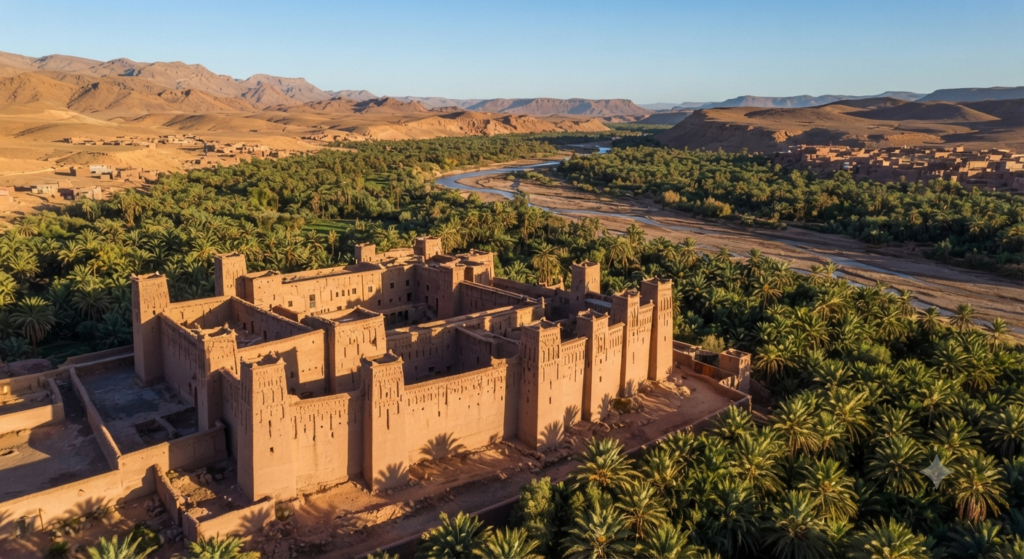
 Located at the confluence of the Anti-Atlas mountains and the sprawling Draa river basin, Agdez serves as the indispensable sentinel of southern Morocco. Far from being a mere transit point, it is a hub of historical and cultural significance, marking the transition between the arid mountain ranges and the verdant palm corridors that stretch toward the Sahara.
The Kasbah des Caïds: A Testimony to Power
The architectural identity of Agdez is inextricably linked to the Kasbah des Caïds. This monumental structure is not merely a residence; it is a masterclass in the defensive strategy and social administration of the 19th and early 20th centuries.
Defensive Design: Its high, fortified earthen walls were designed to oversee the vital trade routes linking the northern imperial cities to the trans-Saharan paths of Timbuktu.
Materiality: Constructed entirely from pisé (rammed earth), the kasbah maintains a thermal stability that modern concrete cannot emulate, illustrating the sophisticated environmental wisdom of local builders.
Social Function: It served as the seat of local governance, managing the allocation of resources—particularly water—within the valley.
The Oasis Ecosystem
Agdez thrives thanks to the Draa river, which creates a narrow, high-density strip of agricultural productivity. This oasis environment is managed through traditional systems:
Date Palm Poly-culture: The layered farming system—where palms provide shade for fruit trees, which in turn shade seasonal crops—maximizes the limited water availability.
Water Management: The community adheres to ancestral rules of water sharing, ensuring that every plot within the palm grove receives its designated irrigation, preventing the desertification of the oasis.
The Imperative of Authentic Preservation
As tourism interest grows, Agdez stands at a crossroads. The preservation of its historic center and the protection of its agricultural practices are paramount. Visitors are encouraged to engage with local actors who prioritize heritage conservation, ensuring that the legacy of Agdez remains a living history rather than a stagnant relic.