


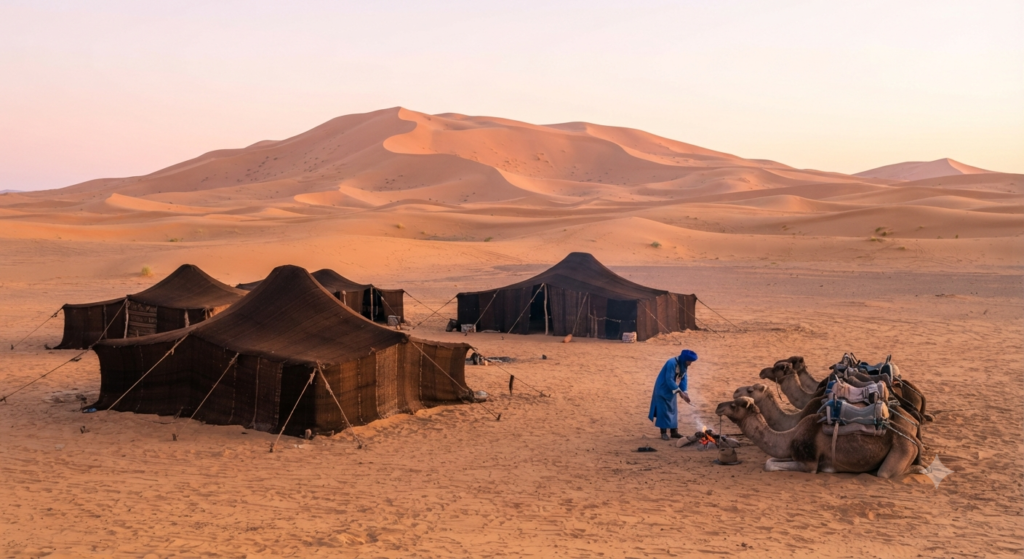
 M’Hamid El Ghizlane serves as the literal end of the paved road, marking the transition from settled oasis life to the vast, shifting expanse of the Sahara Desert. This region is the ancestral territory of nomadic tribes and remains the most authentic departure point for reaching the Erg Chigaga dunes.
Nomadic Heritage and Social Structure
The history of M’Hamid is defined by the resilience of its nomadic populations. Unlike static urban centers, the social fabric here is built on mobility and deep-seated knowledge of the desert environment.
Cultural Preservation: Festivals hosted in the region act as essential vessels for the transmission of Hassani and Amazigh music, ensuring that oral traditions are not lost to modernization.
Traditional Navigation: The community maintains an intimate knowledge of the desert terrain, which is fundamental to the sustainable trekking practices promoted by local guides.
The Ecosystem and Conservation
The proximity to the desert creates a unique environmental challenge that local actors manage with great care.
Sustainable Tourism: Unlike mass-market desert camps, local tourism operators—often coordinated by experienced desert managers—emphasize low-impact camel treks that respect the fragile desert flora and fauna.
Water Governance: Management of deep-well water remains a critical communal task, as the oasis serves as the final life-support station before the deep desert.