


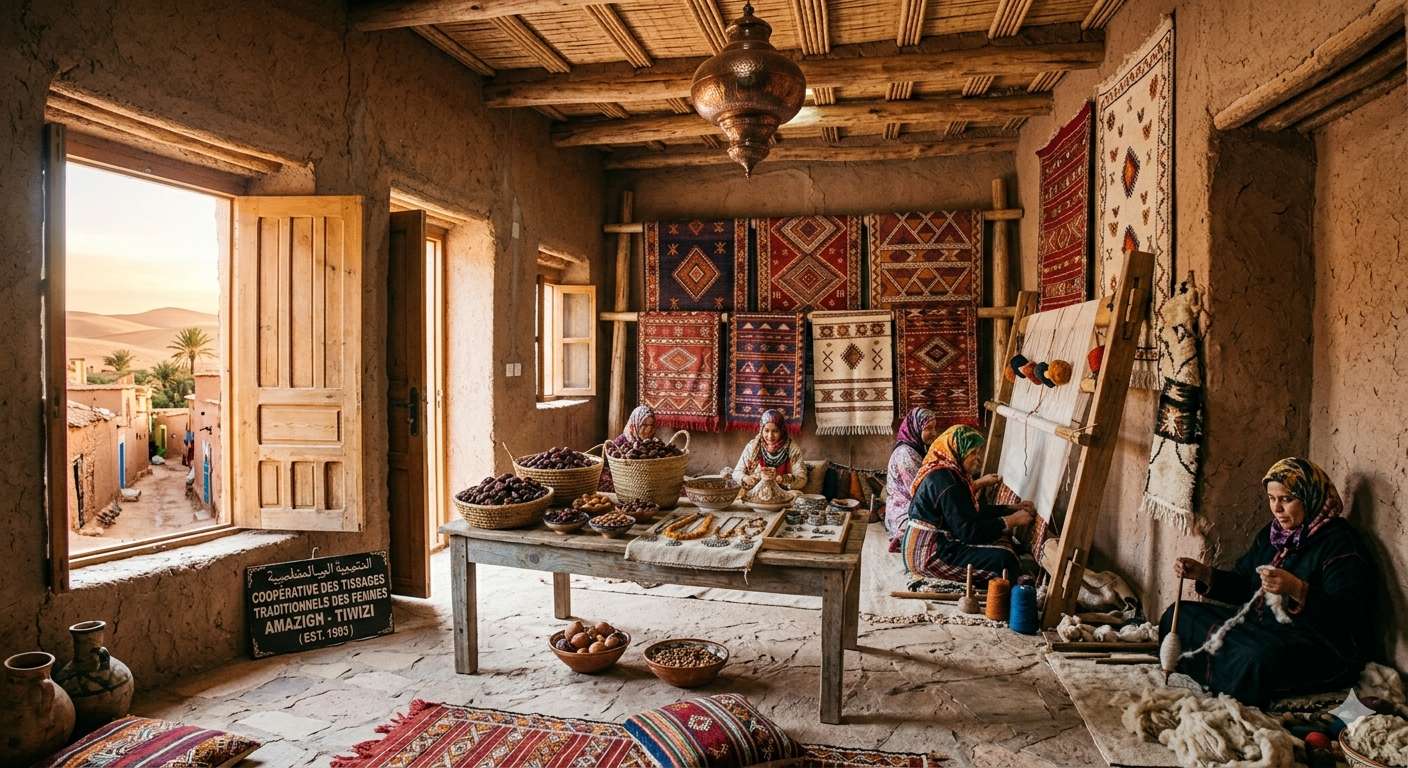
 Shopping in southeastern Morocco is a vibrant and unforgettable cultural adventure. In fact, exploring the local markets allows you to discover unique treasures that carry deep historical meaning. Furthermore, your purchases play a huge role in sustaining rural families and preserving ancient craft techniques. Therefore, choosing where and what to buy is an important responsibility for conscious travelers. Below, you will find excellent practices to guide your shopping decisions.
In essence, buying regional products is a direct form of economic solidarity. Consequently, supporting the right creators ensures that your travel budget protects the local cultural heritage.
1. Seek Out Authentic Regional Products
To begin with, you should focus on items that are traditionally handcrafted in the pre-Saharan valleys and oases. Specifically, certain specialties represent the true identity of the local communities.
Hand-Woven Amazigh Carpets: First, every traditional rug tells a unique story through its geometric patterns. Indeed, local weavers use natural wool and plant-based dyes to create these magnificent pieces of art.
Oasis Dates and Agricultural Goods: Secondly, the region is famous for producing high-quality dates directly from local palm groves. As a result, buying fresh agricultural goods supports the historic farming systems of the valleys.
Traditional Silver Jewelry: Moreover, regional craftsmen are highly skilled in creating intricate metallic pieces. By doing so, they keep ancestral metalworking traditions alive for future generations.
2. Buy Directly from Independent Cooperatives
Moving on to the choice of locations, where you spend your money matters just as much as what you buy. In particular, shopping directly at the source changes how wealth is distributed.
Support Women’s Cooperatives: To start, look for officially registered women’s associations for textiles or agricultural goods. Conversely, avoiding middleman commercial hubs guarantees that the women artisans receive a fair and complete wage.
Visit Local Artisan Workshops: In addition, try to purchase items directly from the workshops located within ancient palaces. This is because buying on-site lets you witness the incredible skill required to make each item.
Engage with the Makers: Thus, shopping becomes a beautiful opportunity for genuine human connection. Ultimately, learning about the creation process adds immense sentimental value to your souvenirs.
3. Practice Respectful Market Interaction
In addition to finding cooperatives, understanding local market customs is essential for a positive experience. However, travelers should always approach the marketplace with patience and respect.
Understand Fair Haggling: First, negotiating the price is a normal social custom in traditional markets. Consequently, you should participate with a friendly smile, but always respect the artisan’s hard work by paying a fair price.
Carry Small Cash Notes: Next, small village vendors and rural cooperatives cannot process credit cards. Therefore, always keep plenty of small Moroccan Dirham notes on hand to facilitate direct payments.
Avoid Mass-Produced Souvenirs: Finally, look closely at the materials to ensure you are buying genuine regional crafts. By doing so, you protect the local economy from cheap, industrially imported imitations.
Shopping Checklist for MeldanGo Explorers
To sum up, before you purchase your next travel souvenir, keep this quick checklist in mind:
First, prioritize women’s cooperatives to ensure your money directly supports independent female artisans.
Second, choose authentic regional specialties like hand-woven textiles or oasis dates to value local traditions.
Third, utilize verified regional directories to locate genuine craft workshops far from heavy tourist traps.
Finaly, always maintain a polite attitude during price discussions to honor the local culture of hospitality.