


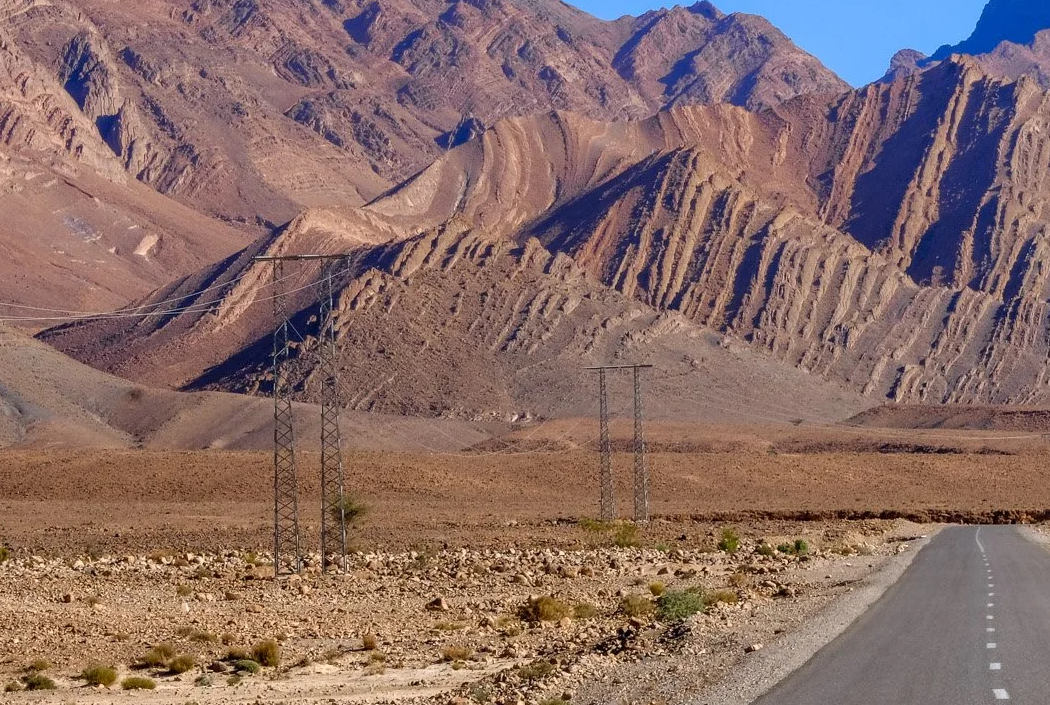
 There is no better way to experience the vast landscapes of Southern Morocco than a road trip. Leaving the high peaks of the Atlas Mountains behind and watching the terrain transform into rugged stone deserts, lush river oases, and towering canyons is a journey every traveler should make at least once.
However, driving into arid regions like the Todgha Valley, Tinghir, and toward the dunes of Merzouga requires a different level of preparation than driving along the Atlantic coast or through northern cities. With 0% humidity, intense sun exposure, and unique local driving habits, here is what you need to know to ensure a smooth and safe journey.
1. Road Conditions: What to Expect
The main highway connecting Marrakech to Ouarzazate, Tinghir, and the desert (the N10) is fully paved, well-maintained, and accessible to any standard rental car. You do not need a large 4×4 if you plan to stick to the main towns and tourist sites.
However, the environment presents its own challenges:
- The Mountain Passes: Crossing the Tizi n’Tichka pass can be slow due to heavy trucks and ongoing maintenance. Take your time and avoid overtaking on sharp curves.
- Flash Floods: While the climate is predominantly dry, occasional heavy mountain rains can cause dry riverbeds (wadis) to flood across the roads instantly. If you see water running over a road crossing, never attempt to drive through it; wait for local traffic to signal that it is safe.
2. Navigating the Local Driving Culture
Driving in rural Southern Morocco is often less about strict highway codes and more about mutual awareness.
- Share the Road: The asphalt is not just for cars. You will frequently share the lane with heavily laden donkeys, cyclists riding on the shoulder, herds of goats crossing, and local pedestrians walking between villages. Always reduce your speed when passing through oasis settlements.
- The Horn is Helpful: Unlike in western countries where a horn signifies anger, in Morocco, a short tap on the horn simply means “I am here” or “I am overtaking you.” Use it gently to alert cyclists or trucks on narrow mountain bends.
3. Police Checkpoints: Stay Calm and Prepared
You will encounter several gendarmerie or police checkpoints at the entrances and exits of major towns like Tinghir. They are there for safety and are completely standard.
- The Rule: When you see a checkpoint sign, slow down significantly. Do not drive through until the officer explicitly waves you forward with a hand gesture.
- Documents: Always keep your physical passport, driver’s license, and vehicle rental agreement in an accessible folder. Officers are almost always polite, welcoming, and helpful to tourists.
4. Arid Environment Essentials
The desert climate means you are operating in an environment with high temperatures and near-zero air humidity. Your vehicle and your body will feel the effects quickly.
- Hydration for Two: Never let your car’s fuel tank drop below half capacity; gas stations can be spaced far apart once you leave the main axis. Equally, always carry a crate of bottled water in your trunk. If your car breaks down in the heat, that water is your lifeline.
- Watch the Temperature: Keep a close eye on your dashboard’s engine temperature gauge, especially when climbing the steep gorges or mountain passes with the air conditioning running at maximum.
Traveler’s Tip: Planning Your Stops
Do not try to rush from Marrakech to the deep desert dunes in a single day. It is a exhausting 9-hour drive that forces you to miss the best parts of the country. Instead, break your journey perfectly in the middle by spending a night in the Todgha Valley. Basing yourself in Tinghir allows you to rest, explore the ancient palmeraie, and tackle the final leg to the desert fully refreshed the next morning.
Planning your self-drive adventure? Discover reliable local car rental advice, securely located secure parking spots, and road-trip friendly accommodations on MeldanGo.